There is a reason fitness coaches consistently top the list of successful social media entrepreneurs. The content works in every format: short-form demo videos, transformation photos, motivational text posts, educational infographics, long-form tutorials. The audience is vast and emotionally motivated. And the product — coaching, programmes, and community — can be delivered entirely online.
But the fitness coaches building sustainable six-figure businesses are not succeeding by accident. They have a specific approach to platform strategy, content type, and audience conversion that is replicable for anyone willing to apply it consistently.
This guide breaks down how successful fitness coaches approach social media — platform by platform, content type by content type — and what any coach at any stage can take from their playbook.
The Business Model First
Before the content strategy, you need to understand what you are building. The most common six-figure fitness coach business models look like this:
Online coaching (1:1): The highest-margin model. Clients pay monthly retainers for personalised programming, check-ins, and accountability. Social media serves as the primary acquisition channel.
Group programmes: Lower price per person, higher volume. A 12-week transformation programme can generate significant revenue at modest enrolment numbers. Social media drives launch campaigns.
Digital products: Pre-built training programmes, nutrition guides, and workout PDFs. Passive income that scales without time investment. Social media generates evergreen traffic.
Membership communities: Monthly recurring revenue for ongoing content, community access, and accountability. Works particularly well on platforms like Circle or Skool, with social media driving new member acquisition.
Most successful coaches eventually combine all four, but starting with one offer and one audience is what creates the foundation.
Platform Strategy: Where Fitness Coaches Win
Instagram — The Portfolio Platform
Instagram remains the most important platform for fitness coaches. It functions as a visual portfolio, lead generation machine, and community hub simultaneously.
What works on Instagram for fitness:
– Transformation photos and videos: Before/after content still generates the highest organic reach for fitness accounts. Authenticity beats production value here.
– Educational Reels (60–90 seconds): “3 form mistakes on your squat” or “Why you’re not losing fat even in a calorie deficit” — educational mini-lessons consistently outperform purely motivational content.
– Stories for community building: Daily behind-the-scenes, polls, Q&As, and client shoutouts. Stories are where coaches build the parasocial relationships that convert followers into buyers.
– Carousels for saves and reach: Step-by-step workout guides, nutrition frameworks, and myth-busting posts in carousel format consistently generate high save rates, which drives algorithmic distribution.
Posting rhythm: 4–5 times per week (mix of Reels, carousels, single images, Stories daily).
TikTok — The Discovery Engine
TikTok is the primary discovery platform in 2026. Coaches with zero audience can reach tens of thousands of new people with a single well-structured video. The algorithm rewards novelty and watch time over follower count.
What works on TikTok for fitness:
– Quick wins content: “Try this 30-second hip flexor stretch” — fast, actionable content with a clear payoff in the first five seconds
– Opinion and debate content: “Cardio is overrated for fat loss” — content that takes a clear position generates comments and reshares
– Day-in-the-life content: Following a fitness coach through their day builds trust quickly
– Debunking myths: “I tried [viral diet trend] for 30 days — here’s what actually happened”
Posting rhythm: 5–7 times per week. Volume matters on TikTok more than any other platform.
YouTube — The Trust Builder
YouTube works on a different timescale than Instagram and TikTok but builds deeper trust. A 15-minute video of a coach explaining their programming philosophy or walking through a full workout is the content that converts viewers into paying clients.
Posting rhythm: 1–2 times per week. Quality over volume — a well-edited, well-structured video beats a quickly shot one every time.
Facebook — The Community Platform
Facebook Groups have become the go-to community platform for fitness coaches. A free challenge group (30-Day Fat Loss Challenge, 21-Day Mobility Reset) functions as both a lead magnet and a soft sell environment.
The Content Pillars That Drive Business
Successful fitness coaches organise their content around four pillars:
1. Education (30% of content): Teaches the audience something useful — exercise technique, nutrition principles, recovery science. Builds credibility and search visibility.
2. Inspiration and Transformation (25% of content): Client results, personal transformation milestones, motivational content that speaks to the audience’s aspirations.
3. Behind the Scenes (25% of content): The coach’s own training, daily routine, meal prep, challenges, and authentic moments. This humanises the brand and builds parasocial trust.
4. Direct Offer (20% of content): Programme launches, coaching spots opening, testimonials. If 80 percent of your content provides value, the 20 percent that sells never feels pushy.
The Lead Magnet Funnel
The content calendar drives awareness, but the business runs on an email list:
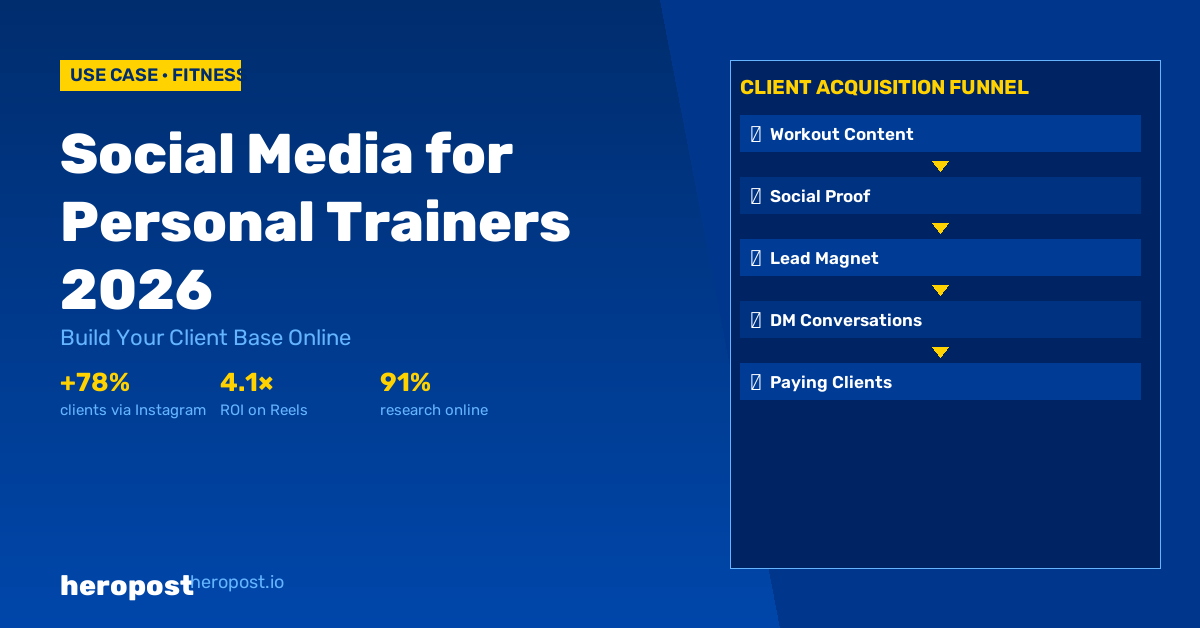
- Content (social) → Someone discovers the coach via a Reel, TikTok, or YouTube video
- Lead magnet → The coach offers something free in exchange for an email address
- Email sequence → An automated email sequence builds trust and makes an offer
- Offer → Coaching application, programme purchase, or membership sign-up
The lead magnet is the critical bridge. Coaches who skip straight from social content to paid offer lose the majority of warm leads who are not yet ready to buy.
Content Scheduling: The Practical Workflow
Batching: Successful coaches do not create content daily. They dedicate one or two days per week to creating 7–10 pieces of content and then schedule everything in advance.
Repurposing: A YouTube video becomes 3–5 short clips for TikTok and Instagram Reels. A Reel becomes a carousel post. One idea, multiple formats, multiple platforms.
Scheduling tools: Tools like Heropost let coaches schedule content across Instagram, TikTok, Facebook, and YouTube from a single dashboard, making a volume strategy actually sustainable.
The Numbers Behind a Six-Figure Fitness Business
| Revenue Stream | Price | Volume | Monthly Revenue |
|---|---|---|---|
| 1:1 Online Coaching | £400/month | 20 clients | £8,000 |
| 12-Week Group Programme | £297/launch | 20 clients × 2 launches/year | £990/month average |
| Digital Products | £47 avg | 20 sales/month | £940 |
| Membership | £27/month | 100 members | £2,700 |
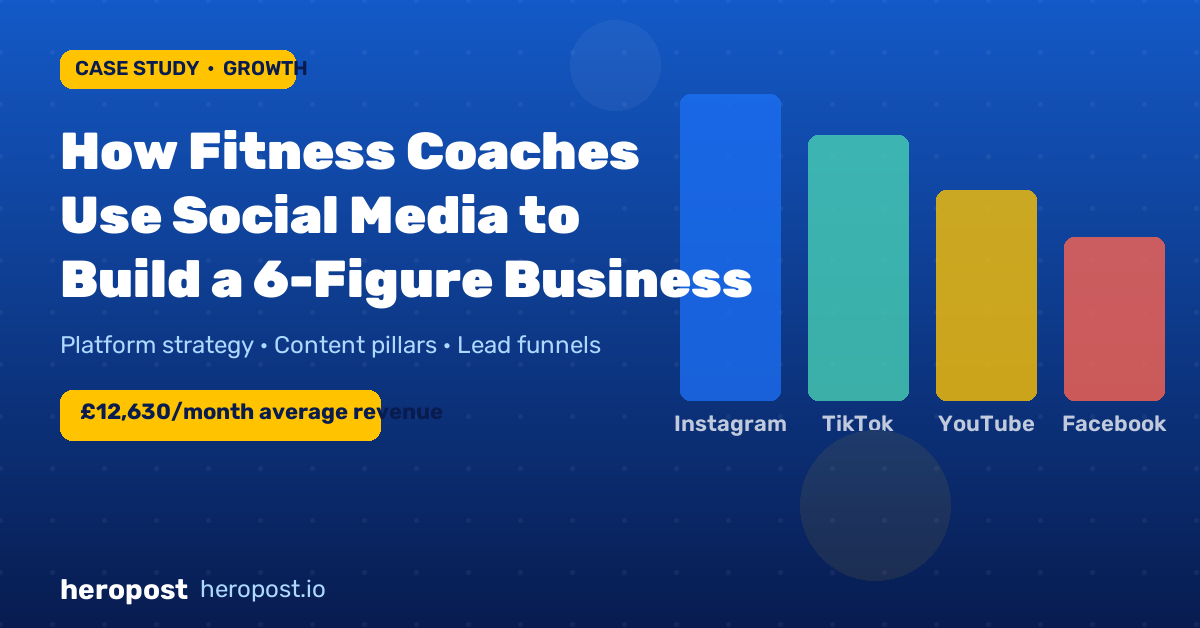
| Total | £12,630/month |
Getting here requires an audience, but not a huge one. Most coaches at this level have between 10,000 and 50,000 followers across platforms. Conversion rate matters far more than raw follower count.
What Separates Six-Figure Coaches from the Rest
They niche specifically. “Strength training for women over 40” or “Fat loss for desk workers” speaks to a specific person with a specific problem. Niche coaches command higher prices and generate more passionate communities.
They show up when they do not feel like it. Consistency beats quality at the early stages. The coaches who post five times a week for two years, even when the views are low, build audiences.
They treat their social channels as businesses. They track which content converts, which lead magnets perform, and which emails get opened.
They invest in tools that save time. Every hour spent manually publishing content is an hour not spent coaching, creating, or selling.
Getting Started
- Pick one platform to go deep on first. For most coaches in 2026, that is Instagram or TikTok.
- Create your lead magnet before you need it. A free workout plan or 5-day challenge email sequence can be built in a week.
- Batch-create and pre-schedule. Set aside two days a week for content creation. Schedule everything in advance with a tool like Heropost.
- Niche your content before you niche your offer. Content that speaks to a specific person builds a specific audience.
- Post every week without exception for 90 days. Most coaches give up before the algorithm and audience compounds.
The fitness coaches building the biggest businesses on social media in 2026 are the most consistent, the most strategic, and the most willing to treat their social media as the marketing infrastructure for a real business.
Heropost helps fitness coaches manage their entire content calendar in one place — schedule across Instagram, TikTok, Facebook, and YouTube, batch your posts in advance, and track what is working from a single dashboard. Start your free trial at heropost.io.