Introduction
The talent market has shifted permanently. Top candidates in 2026 — the ones with options, the ones your competitors are also pursuing — research employers on social media before they apply, before they accept interviews, and before they sign offers. Your social media presence is now part of your employer brand whether you manage it intentionally or not.
Companies that invest in authentic, consistent social media employer branding attract higher-quality applicants, reduce time-to-hire, lower cost-per-hire, and improve offer acceptance rates. Companies that ignore it are invisible to exactly the candidates they most want to attract.
This guide covers how to build a social media employer brand that attracts the right talent in 2026.
What Candidates Look for on Social Media Before Applying
Research into candidate behaviour consistently shows that before applying or accepting a role, candidates research:
- Company culture: What is it actually like to work there? Do the people seem engaged and happy? Do the values expressed match what employees say?
- Leadership: What kind of leaders run this company? Are they visible, thoughtful, and genuine?
- Growth and opportunity: Is the company growing? Are there career development stories?
- Diversity and inclusion: Does the workforce reflect the kind of inclusive culture the candidate wants to work in?
- Values in action: Do the company’s stated values show up in actual decisions and behaviours?
Social media is where candidates look for authentic answers to these questions. Polished careers pages are expected and largely discounted — social media content from real employees, leadership, and company moments is what actually shapes perception.
The Platforms That Matter for Employer Branding
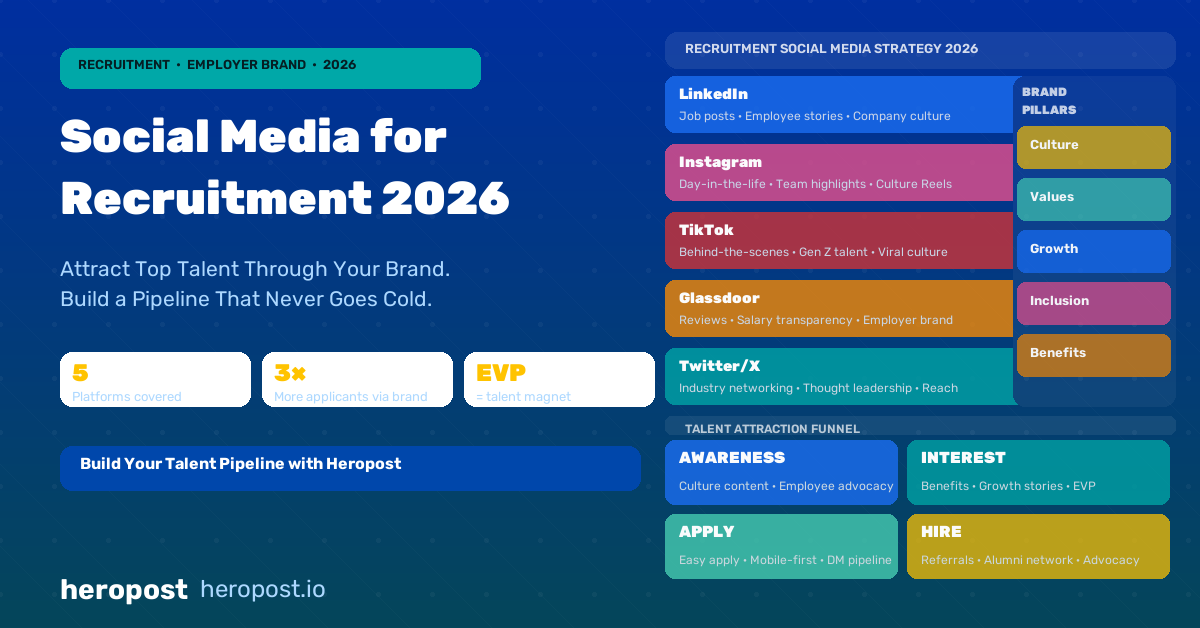
LinkedIn: The primary employer branding platform. Job seekers research companies extensively on LinkedIn — reviewing employee profiles, reading company posts, looking at job listings. A company page with regular, authentic content about culture, team, and opportunity is essential.
Instagram: Particularly important for consumer-facing brands, creative industries, and companies targeting younger talent. Behind-the-scenes culture content, team events, office environments, and employee spotlights perform well.
TikTok: Growing rapidly as an employer branding platform for companies targeting Gen Z talent. “Day in the life” videos, office tours, team challenges, and genuine behind-the-scenes content resonate strongly with younger audiences evaluating employers.
Glassdoor: While not strictly social media, Glassdoor reviews heavily influence candidate perception. Respond thoughtfully to both positive and negative reviews. Engagement signals that leadership is listening.
Content Pillars for Employer Branding
Employee stories and spotlights
Authentic stories from real employees about their career paths, their work, their team, and why they chose the company. These should be genuine — not corporate PR. The most effective employee spotlights include specifics: how they came to the company, what surprised them, what they are building, what they are proud of.
Day-in-the-life content
Video content following an employee through a typical workday humanises the work and answers one of candidates’ most common questions: “What would I actually be doing every day?” These consistently generate strong engagement and saves from candidates in early research mode.
Behind-the-scenes culture moments
Team events, office life, celebrations, traditions — the informal culture that does not appear in a job description. These posts build brand personality and help candidates assess culture fit before applying.
Hiring announcement content
When you open new roles, announce them as content, not just job ads. “We are looking for our next [role] — here is what the team is building and why this role matters” generates applications from candidates who would never click a standard job ad.
Leadership visibility
When company leadership posts authentically about the company’s direction, values, and culture, it signals the kind of transparent, accessible leadership that top candidates value. Founder and CEO social media presence is particularly influential for candidate perception at growth-stage companies.
Values in action
Share specific examples of company values being lived out — a decision made based on stated values, an initiative that demonstrates commitment to stated priorities. “We just cancelled a partnership because it conflicted with our sustainability commitments” is more credible than “We value sustainability.”
Building a Social Media Employer Brand: The Process
Step 1: Define your employer value proposition (EVP)
What makes your company a genuinely compelling place to work? What do your best employees say when asked why they stay? This authentic core — not marketing language — should underpin all employer branding content.
Step 2: Activate your employees as advocates
The most credible employer branding content is created by employees, not HR teams. Create an employee advocacy programme: provide content prompts, social media guidelines, and recognition for team members who share their genuine experiences.
Step 3: Build a content calendar
Consistent employer branding content requires planning. Build a dedicated content calendar that includes employee spotlights (monthly), culture moments (weekly), thought leadership from leadership (bi-weekly), and hiring announcements (as needed).
Step 4: Measure impact
Track metrics that connect employer branding to business outcomes:
– Application volume and quality per role
– Offer acceptance rate
– Time-to-hire
– Cost-per-hire
– Employee Net Promoter Score (eNPS)
– Glassdoor rating trajectory
Managing Multi-Platform Employer Branding
Maintaining consistent employer branding content across LinkedIn, Instagram, TikTok, and other platforms while managing a recruitment function is a significant operational commitment. Scheduling tools like Heropost allow HR and talent teams to batch-create employer branding content and schedule it across platforms, ensuring consistency without daily management overhead.
Conclusion
The companies that build the best teams in 2026 are the ones that treat talent attraction as a marketing discipline, not just an HR function. Your social media employer brand is always active — it is either working for you or against you, depending on how intentionally you manage it. Invest in authentic, consistent content that shows real people doing meaningful work in a genuine culture, and the best candidates will find you.