Introduction
Social media moves fast. What was cutting-edge strategy in January can be standard practice by July. Staying ahead of meaningful trends — rather than chasing every fleeting shift — is one of the most valuable habits a social media marketer can build.
This post covers the significant trends shaping the second half of 2026: not hype, not speculation, but patterns with clear momentum that marketers should be paying attention to right now.
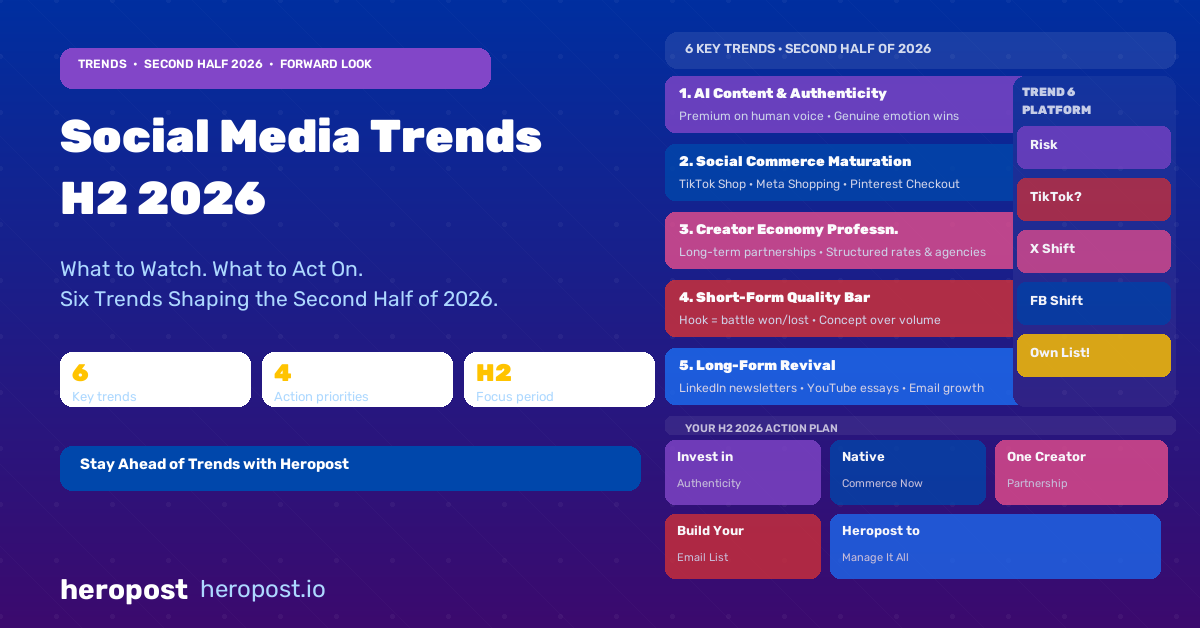
Trend 1: AI-Generated Content Normalisation and the Premium on Authenticity
AI-generated social media content has moved from novelty to standard practice. As a result, authenticity signals are becoming more algorithmically valuable. Content that clearly originates from a real person’s experience — including imperfect production quality, genuine emotion, and visible personality — is increasingly differentiated from polished AI-generated alternatives.
What this means for your strategy: Invest in content formats AI cannot convincingly replicate: live video, genuine behind-the-scenes documentation, real customer stories, founder personality.
Trend 2: Social Commerce Maturation
TikTok Shop has demonstrated that in-app commerce works at scale. Meta’s Shopping infrastructure is deepening. Pinterest’s native checkout is maturing. YouTube is expanding its Shopping affiliate programme.
What this means for your strategy: If you sell physical products, in-app commerce integration is no longer optional. Build the infrastructure: product catalogue, native checkout, creator affiliate partnerships.
Trend 3: The Creator Economy Professionalisation
What was once a hobbyist economy of individual influencers is now a structured industry with talent agencies, standardised contracts, established rate cards, and creator unions in several markets.
What this means for your strategy: Invest in long-term creator partnerships rather than one-off campaign engagements. One well-chosen long-term partner is often more valuable than ten transactional partnerships.
Trend 4: Short-Form Video Continues to Dominate — But Quality Bar Rises
As every brand has recognised that Reels and TikToks get reach, competition for attention has intensified. The brands winning short-form in H2 2026 have distinctive creative approaches, not just consistent posting schedules.
What this means for your strategy: Invest more in ideation and concept development. Produce fewer videos with stronger hooks rather than more videos with average concepts.
Trend 5: Longer-Form Content Returning on Some Platforms
LinkedIn newsletters have seen strong subscriber growth. YouTube long-form content is growing. Substack and email newsletters have captured audiences fatigued by short-form feeds.
What this means for your strategy: Consider whether your brand has a long-form opportunity alongside short-form. A weekly LinkedIn newsletter or monthly YouTube essay sends a signal of depth and commitment that stands out from constant short content.
Trend 6: Platform Concentration Risk is Real
TikTok faces regulatory risk in Western markets. X/Twitter has continued to fragment its advertiser base. Facebook’s demographic shift continues. Brands that have concentrated heavily on a single platform are exposed to risks that were not previously significant.
What this means for your strategy: Ensure your strategy includes genuine audience-ownership mechanisms — email lists, SMS, or communities you control. When you own the audience relationship, a platform disruption does not reset everything you have built.
Conclusion
The second half of 2026 rewards the same fundamentals that have always driven social media success — authenticity, consistency, genuine value for a specific audience — but applies them in a landscape that is more competitive, more commerce-integrated, and more algorithmically sophisticated. Stay curious, test quickly, and adapt accordingly.