The image stops the scroll. The caption does everything else.
A great caption turns a passing glance into an engaged read. It transforms a viewer into a follower. It converts curiosity into a click, a save, a share, or an enquiry. Yet most brands treat captions as an afterthought. The brands with the highest engagement rates invest as much thought into their captions as their visuals.
The Caption Hook: Your Most Important Words
On every platform, captions are displayed truncated before a “read more” prompt. These opening lines are your hook — and a caption without a strong hook is read by almost nobody.
What makes a strong caption hook:
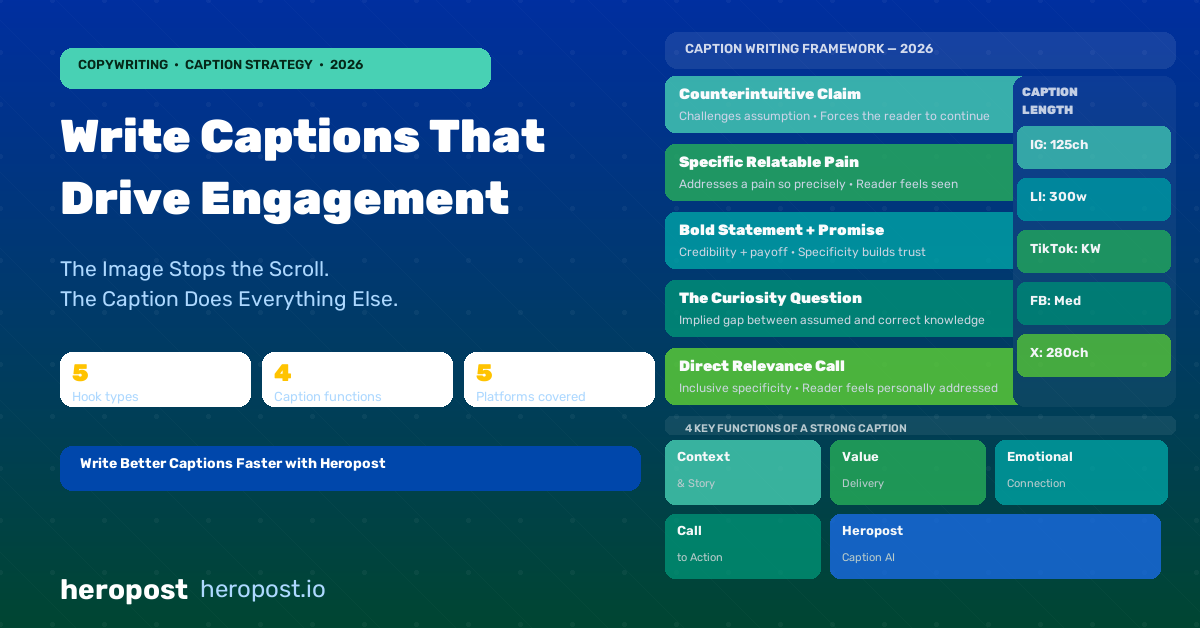
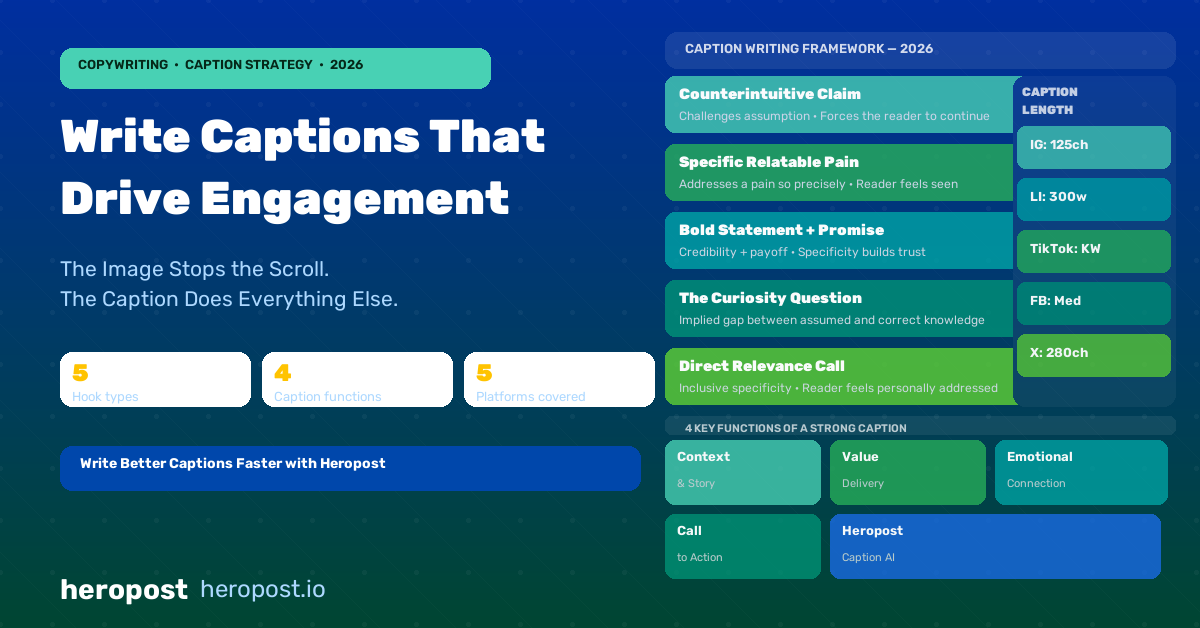
- Counterintuitive claim: “Most social media advice will actually hurt your engagement.” Challenges assumption — readers must continue to understand why.
- Specific, relatable scenario: “If you have ever posted something you were proud of and got eleven likes, this is for you.”
- Bold statement with implicit promise: “I spent £40,000 on social media ads. Here is what actually worked.”
- Question that reveals an assumed wrong answer: “Do you know what the most-shared type of post is on LinkedIn? (It is probably not what you think.)”
- Direct relevance statement: “If you are a small business owner posting on Instagram in 2026, read this.”
Platform-Specific Caption Lengths
Instagram: Short (under 125 characters) for strong visual content; medium (125–300 words) for storytelling; long (300+ words) for vulnerable or highly educational content.
LinkedIn: Longer captions consistently outperform short ones. Ideal length: 150–300 words in short paragraphs with single-sentence line breaks.
TikTok: Caption length matters less — use captions for keywords and a brief hook.
Facebook: Medium to long captions work well, particularly for storytelling content in Groups.
Twitter/X: 280 characters by design. Threads allow for length when content demands it.
The Four Key Functions of a Caption
1. Context and story: Provide the narrative behind the visual. The story gives the image meaning beyond what can be seen.
2. Value delivery: Teach the reader something. Give them a tip, framework, or insight they can use. Value-delivering captions earn saves.
3. Emotional connection: Share something authentic — an honest admission, a surprising moment, a genuine emotion. Emotional captions earn shares.
4. Call to action: Direct the reader to do something: comment, save, click, follow, visit, DM. Captions without CTAs leave conversion to chance.
Practical Caption Frameworks
Problem-Agitate-Solve (PAS): Name a specific problem → expand on why it is frustrating → offer the solution.
Story-Lesson-CTA: Open with a brief specific story → extract the lesson → invite a response.
The List: “5 reasons / tips / mistakes…” Readers can scan and extract value quickly.
Hashtags in 2026
- Instagram: 5–10 highly relevant niche hashtags. Specificity wins over volume.
- LinkedIn: 2–3 relevant hashtags. Limited algorithmic impact.
- TikTok: Mix of niche-specific and broader topic hashtags.
- Twitter/X: 1–2 if genuinely trending or topical.
Writing Process: Getting Better at Captions
- Draft without editing — get the idea out first.
- Read the first line aloud — would you read further?
- Cut by 30% — remove everything that does not add meaning.
- Check the CTA — is there one? Is it clear?
- Read the whole thing again — does it earn the reader’s time?
Conclusion
Strong captions are a learnable skill. Start by improving your hooks — that single change will meaningfully improve engagement rates within weeks. Test length, format, and CTAs systematically. The brands investing in caption quality are separating themselves from the majority who continue to treat words as image decoration.