Accounting has traditionally been built on trust and referrals — a slow-burn model where reputation accumulates over years of reliable work and professional relationships. That model has not disappeared, but it is no longer sufficient on its own.
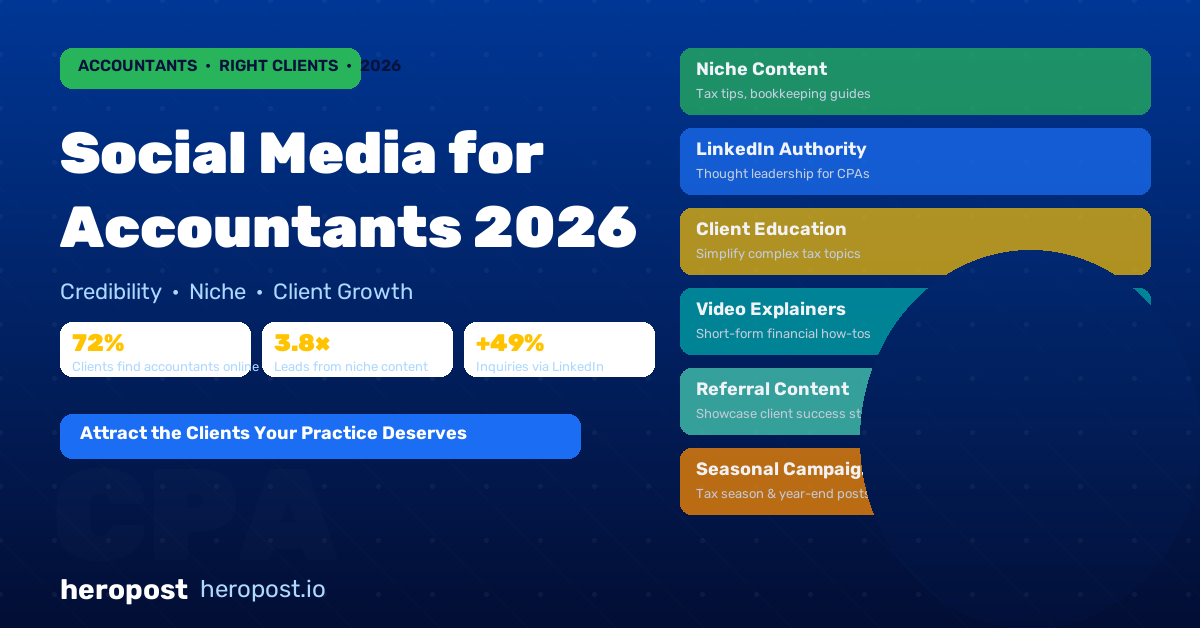
In 2026, prospective clients research accountants online before making contact. They read LinkedIn profiles, watch YouTube explainers, and look for evidence that a specific firm understands their particular situation — whether that is freelance tax planning, R&D tax credits, international VAT, or small business bookkeeping. The accountants and firms showing up consistently online with relevant expertise attract enquiries that never went to a referral-dependent competitor.
More significantly: social media is now the most efficient way to position as a specialist rather than a generalist — which is the highest-leverage shift available to most accounting practices.
The Case for Specialist Positioning on Social Media
The most commercially successful accounting social media presences are not “full-service firms for all businesses.” They are specialists: the accountant for tech startups, the firm for healthcare professionals, the practice focused on property investors, the specialist in creative industry freelancers.
Specialist positioning makes social media significantly more effective because:
- Your content is more relevant to a defined audience — it speaks directly to their specific situations, questions, and concerns
- Discovery is more efficient — people searching for “accountant for freelancers” or “R&D tax credit specialist” find you faster than they find a generalist
- Trust is established faster — demonstrating you understand a niche’s specific challenges signals genuine expertise that generic firm profiles cannot replicate
Social media forces the positioning conversation that many firms avoid in other marketing. A LinkedIn profile that says “we serve all businesses” communicates nothing. A profile that says “we help tech startups navigate R&D tax credits and growth funding” communicates everything.
Platform Strategy for Accountants
LinkedIn — The Primary Platform
LinkedIn is non-negotiable for accounting firms targeting business clients. Your prospective clients — business owners, finance directors, company founders — are active on LinkedIn for professional reasons.
What works on LinkedIn for accountants:
Tax deadline and regulatory reminders: Timely posts about upcoming deadlines (self-assessment, VAT, corporation tax, payroll) are consistently the most-shared accounting content. They demonstrate relevance and provide genuine service to your audience.
Practical guidance posts: “5 things to do before your financial year-end,” “what the latest Budget means for small businesses,” “how to claim home office expenses correctly” — accessible, practical content that answers questions your clients actually have.
Case studies and results: Anonymised stories of how you helped a client reduce their tax liability, navigate an HMRC enquiry, or structure a business sale. Specific outcomes are far more persuasive than generic capability statements.
Niche expertise content: For specialists, deep-dive content on your specific area. An accountant focused on property investors might post weekly about SDLT changes, buy-to-let tax rules, or incorporation decisions. This content is highly searchable and attracts exactly the right audience.
YouTube — For Trust at Scale
YouTube is underused by accountants and consistently rewarding for those who commit to it. People search YouTube for tax and accounting explanations — “how does VAT work,” “what is IR35,” “how to complete a self-assessment tax return” — and the accountant who provides clear, helpful answers becomes the trusted expert before the viewer ever considers making contact.
Educational YouTube content also ranks in Google Search. A video explaining “how to claim R&D tax credits” can generate qualified leads for years after it is published.
TikTok — For Younger Business Owners and Freelancers
#AccountingTok and #TaxTok have emerged as genuinely substantial communities on TikTok. Younger sole traders, freelancers, and first-time business owners are actively seeking accessible explanations of tax, VAT, and business finances on TikTok. The accountants building audiences here are establishing relationships with the next decade of business clients before those clients reach the stage of engaging a traditional firm.
Content Strategy: What to Post
Content Pillar 1: Tax and Regulatory Education
The most-searched accounting content is practical tax guidance. What do your clients most frequently not understand about their tax obligations? What questions do you answer on every onboarding call? Those are your content pillars.
Examples:
– “The difference between being employed and self-employed for tax purposes”
– “What expenses can a limited company director claim?”
– “How does the employment allowance work and who qualifies?”
– “When do you need to register for VAT?”
Content Pillar 2: Timely Regulatory Updates
Budget analysis, HMRC guidance changes, Companies House updates, payroll legislation changes — timely commentary on developments that affect your clients demonstrates you are on top of their obligations and positions you as a trusted advisor.
Content Pillar 3: Business Finance Literacy
Content that helps business owners understand their numbers: what gross margin means and why it matters, how to read a cash flow forecast, the difference between profit and cash. This content serves existing clients and attracts prospective ones who want an accountant who helps them understand their business, not just file their returns.
Content Pillar 4: Niche Expertise Showcase
For specialist practices: deep content demonstrating mastery of your niche. This content may attract a smaller audience but converts at significantly higher rates — the person who reads your detailed post about property investor tax structures and thinks “this is exactly my situation” is already half-sold on calling you.
Lead Generation for Accounting Practices
Free resources: A downloadable guide (“The Freelancer’s Tax Guide 2026” or “Year-End Tax Planning Checklist for Ltd Company Directors”) captures email addresses from exactly the right prospects. Promote it regularly via LinkedIn and YouTube.
Free initial consultation: “30-minute tax efficiency review” offered via social media attracts prospective clients who are cost-conscious but genuinely interested. These calls convert to retained relationships at high rates when the accountant demonstrates immediate value.
Referral source content: Accountants receive significant referrals from solicitors, financial advisers, and mortgage brokers. Create content specifically aimed at these professional connections — content they will want to share with their own clients, reinforcing the referral relationship.
Compliance Considerations
Accounting social media content must avoid:
– Guaranteeing specific tax savings (outcomes depend on individual circumstances)
– Providing specific advice that applies only to individual situations without appropriate caveats
– Making claims about qualifications or memberships that are not current
General educational content explaining how rules work is low-risk. Post it liberally. Reserve compliance review for posts making specific claims about tax outcomes.
Conclusion
Accountants who invest in social media in 2026 are building the most durable competitive advantage available to professional services firms: a sustained online presence that generates trust before a prospect ever makes contact.
The practices that will dominate their niches in five years are the ones investing in LinkedIn thought leadership and YouTube education today.
Heropost helps accounting firms manage their social media calendar — schedule posts across LinkedIn and YouTube, coordinate team contributions, and track what content drives the most enquiries. Start your free trial at heropost.io.