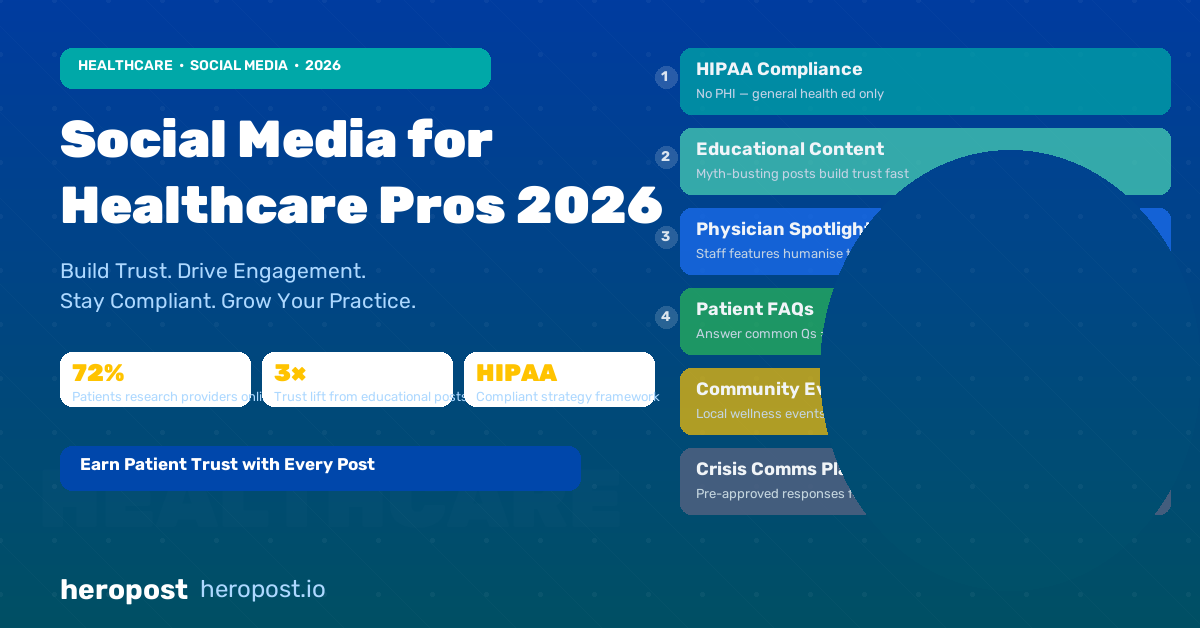
Healthcare professionals occupy a position of extraordinary trust. When a doctor, physiotherapist, dentist, or mental health practitioner shares expertise on social media, people listen — and act on what they hear. This makes social media both a remarkable opportunity and a serious responsibility for healthcare professionals in 2026.
The landscape has shifted dramatically. Patients now research symptoms on TikTok, choose practitioners based on Instagram content, and follow health creators on YouTube for information that used to come exclusively from clinical consultations. This creates real risks — health misinformation spreads rapidly on social media — but it also creates a clear opportunity for credentialed professionals to fill the information gap with accurate, accessible, trustworthy content.
This guide is for healthcare professionals who want to use social media effectively, responsibly, and efficiently.
Why Social Media Matters for Healthcare Professionals
Patients are already there. According to multiple studies, over 60% of people report searching social media before choosing a healthcare provider. Your presence (or absence) on social media is part of the decision patients make about whether to book with you.
Trust is built before the first appointment. When potential patients see a practitioner consistently sharing useful, accurate, empathetic content, they arrive at their first appointment with a pre-existing sense of trust that takes years to build in traditional clinical settings.
You counter misinformation by being present. If credentialed professionals are not producing content, the vacuum is filled by wellness influencers, conspiracy theorists, and well-meaning but unqualified commentators. Showing up online is itself a public health contribution.
Referrals happen on social media. Patients refer friends and family to practitioners they trust. Social media amplifies this. A patient who sees value in your content will share it — and that share is a recommendation to their entire network.
Choosing the Right Platforms
Healthcare professionals do not need to be everywhere. Choose platforms based on your specialty and target patient demographic:
Instagram: Best for visual health content — anatomy explainers, procedure demystifications, before-and-after rehabilitation journeys (with consent), health myth-busting. Works across most healthcare specialties.
TikTok: The fastest-growing platform for health content. Short-form videos explaining health concepts, debunking myths, or showing what a clinical consultation actually looks like. Particularly effective for reaching younger demographics and for less stigmatised specialties.
LinkedIn: Best for B2B healthcare — professionals who consult to organisations, medical researchers, health system executives, and practitioners who speak or teach. Thought leadership content, research commentary, and career development content perform well here.
YouTube: Best for longer-form educational content. Detailed procedure walkthroughs, comprehensive health guides, Q&A sessions. Requires more production investment but has the longest content longevity of any platform.
Facebook: Still highly effective for community building, particularly for chronic condition support communities, age 40+ demographics, and local practice marketing.
Content That Builds Trust in Healthcare
Myth-busting content
Healthcare is full of misinformation that circulates endlessly on social media. Every post you publish correcting a health myth — based on evidence, delivered with empathy — is an act of public service that also demonstrates your expertise. “Does cracking your knuckles cause arthritis?” “Is the HPV vaccine safe?” “Do you need to drink 8 glasses of water per day?” These questions are searched millions of times. Answer them clearly.
Condition explainers
Most patients receive a diagnosis and leave the clinic with a stack of leaflets they will never read. Creating accessible, visual explainers of common conditions you treat — what causes them, how they progress, what treatment looks like — serves existing patients and attracts prospective ones who are researching their own symptoms.
Day-in-the-life content
Demystifying what a clinical visit looks like reduces the anxiety that stops many people from seeking care. A dental practice showing a typical hygiene appointment. A physiotherapist showing what an initial assessment involves. A mental health professional explaining what a first therapy session looks like. This content lowers barriers to care — which is inherently good for both patients and practice.
Patient education series
Create recurring content series around topics that matter to your patient base. A GP posting weekly on managing chronic conditions in daily life. A nutritionist posting monthly on seasonal eating. A sports physio posting on injury prevention for specific sports. Regular series build audience habits and establish long-term authority.
Compliance and Ethical Considerations
Healthcare professionals must navigate compliance requirements that other social media creators do not face. Specific regulations vary by country, specialty, and professional body, but universal principles include:
Patient confidentiality: Never share patient information, photos, or case details without explicit written consent, even in anonymised form if the individual could potentially be identified. This is non-negotiable.
Accurate claims: All health claims must be evidence-based and current. Clearly distinguish between established consensus and emerging or contested evidence. Avoid absolute language about treatments, outcomes, or cures.
Scope of practice: Be explicit when you are speaking within your area of expertise and when you are speaking more generally. Never provide specific medical advice to individuals through social media.
Advertising regulations: Many countries have specific rules about how healthcare services can be advertised, including rules about testimonials, before-and-after imagery, and claims about results. Check your professional body’s guidelines.
Transparency: If you have financial relationships with healthcare brands or products you mention, disclose these clearly in accordance with FTC/ASA guidelines and your professional obligations.
Managing the Time Commitment
Healthcare professionals are among the busiest people in the workforce. Building and maintaining a social media presence has to be sustainable within the realities of clinical practice.
Practical strategies for time-efficient healthcare social media:
- Batch content creation: Set aside two hours per week (or one morning per month for larger batches) to create all your content in one session, then schedule it to publish throughout the period
- Repurpose clinical interactions: Many of your best content ideas come from the questions patients ask in consultations. With consent and appropriate anonymisation, these make excellent educational posts
- Use scheduling tools: A social media management platform like Heropost allows you to schedule posts across all platforms from a single dashboard, eliminating the daily time cost of manual posting
- Delegate production support: You do not have to do everything yourself. A practice manager or content assistant can help with graphics, editing, and scheduling — you provide the expertise and review
Conclusion
Social media gives healthcare professionals a channel to do what they entered the profession to do: educate, demystify, and improve health outcomes at scale. The patients who find you through your social content, book an appointment because they trust what you have shared, and recommend you to their network because of the value you provide — these are real outcomes that compound over time. The investment is modest. The return is trust, authority, and a practice that grows through genuine connection rather than expensive advertising.