Photography is a visually-led craft on visually-led platforms. Many photographers create extraordinary work but struggle to translate their talent into consistent client bookings through social media. The photographers building thriving client pipelines through social media in 2026 are not simply posting their best images and hoping for inbound enquiries — they are using social media strategically.
Choosing Your Platforms
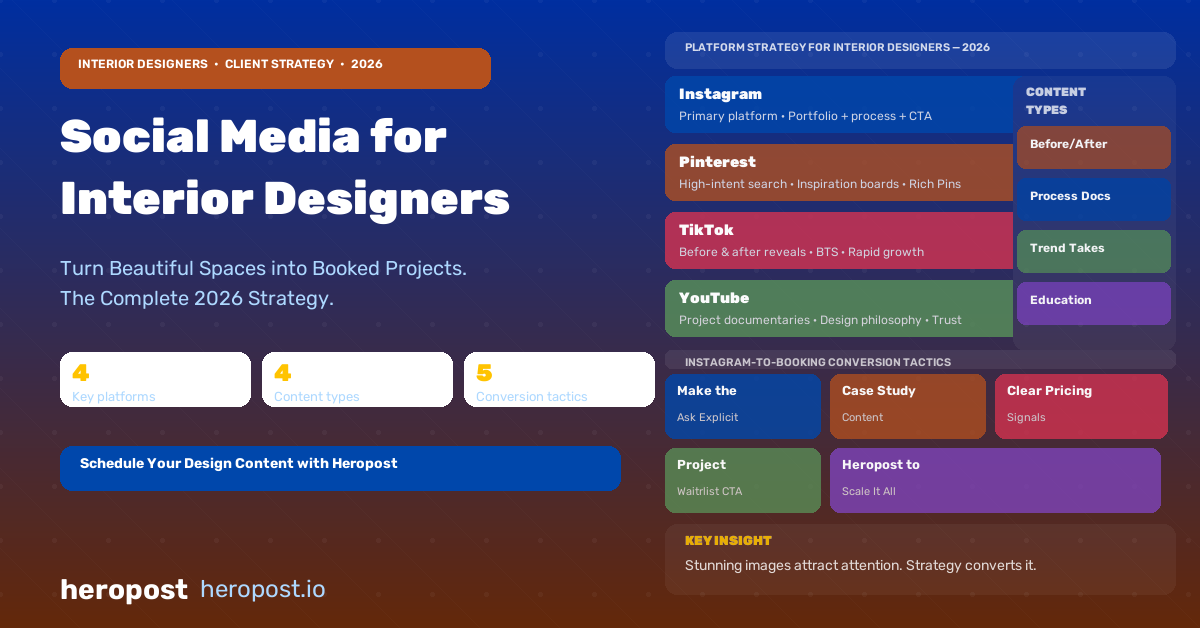
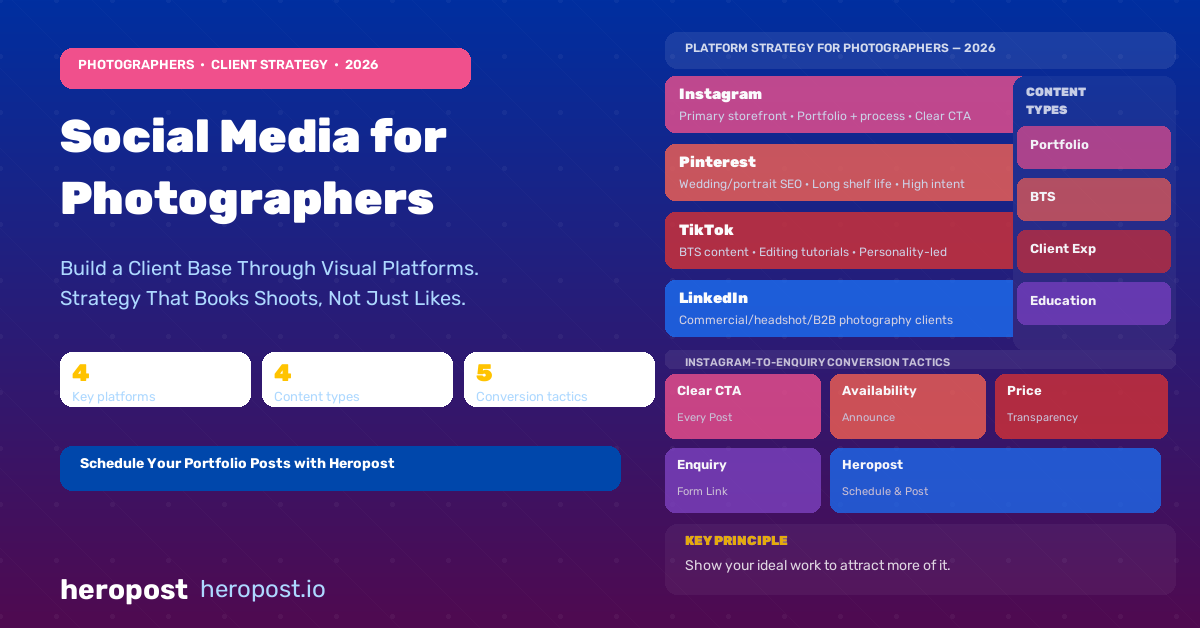
Instagram: The primary platform for most photographers. Instagram is still the dominant visual discovery platform — wedding couples researching photographers, brands looking for product photographers, and families searching for portrait photographers all primarily use Instagram.
Pinterest: Exceptionally strong for wedding, portrait, and lifestyle photographers. Pinterest drives high-intent traffic — couples actively planning weddings pin photographer work extensively, and that content has a far longer shelf life than Instagram posts.
TikTok: Growing rapidly as a discovery channel for photographers, particularly for behind-the-scenes content, editing tutorials, and business-of-photography education.
LinkedIn: Relevant primarily for commercial, corporate, and B2B photographers — headshots, events, architecture, and product photography.
Building an Instagram Portfolio That Converts Clients
Consistency over variety in the early stages. Clients hire photographers whose work they can predict. An Instagram feed that confidently demonstrates your distinctive style signals to the right clients that you are their photographer.
Show your ideal work to attract more of it. If you want to shoot more destination weddings, your feed needs to be full of destination weddings.
Captions matter as much as images. Use captions to tell the story behind the image, share your creative approach, describe the client experience, or invite enquiries directly.
Mix portfolio images with process content. Behind-the-scenes content generates high engagement and builds trust in your professionalism.
Content Beyond the Portfolio
Behind-the-scenes process content: Show the work of getting the shot — the location scouting, the lighting setup, the direction conversation with a client.
Client experience content: Document the full experience of working with you, not just the final images.
Educational content: “How I achieved this lighting,” “why I chose this location,” “what to wear for your portrait session.” Educational content builds credibility and drives shares.
Testimonial and social proof content: Client reactions on delivery day, thank-you messages, and reviews — with permission.
Converting Followers to Enquiries
Clear call to action in every post. “Enquire about availability,” “book a consultation,” “check availability for your date.”
Availability announcements. “Booking is now open for [season/year]” creates urgency and directly invites enquiries.
Price transparency. Including “starting from [price]” attracts serious enquiries and pre-qualifies budget.
Link in bio to a clean enquiry form. An enquiry form that takes 90 seconds to complete converts better than one that takes 10 minutes.
Using Scheduling Tools Efficiently
Batch processing your social media — setting aside 2–3 hours per week to select images, write captions, and schedule posts — is far more efficient than the daily scramble. Heropost allows you to plan and schedule posts across Instagram, Pinterest, and other platforms from a single dashboard, ensuring consistent publishing even during your busiest shoot weeks.
Conclusion
The photographers thriving on social media in 2026 treat their social presence as a client attraction system — not a gallery. They are consistent, they show their process and personality alongside their work, they use clear calls to action, and they create content that speaks directly to their ideal client’s anxieties and aspirations. The images are the proof. The strategy is what brings the right clients to see them.