A restaurant’s best marketing has always been word of mouth. In 2026, that word of mouth travels on Instagram, TikTok, and Facebook — and it reaches far more people, far faster, than a recommendation between neighbours ever could.
The restaurants that consistently fill seats are not the ones with the biggest marketing budgets. They are the ones that understand how to make their food, their atmosphere, and their story irresistible on social media. A single TikTok of a perfectly executed dish at the right moment can generate more bookings than months of print advertising.
This guide covers the complete social media playbook for restaurants, cafes, and food businesses — from platform strategy to content ideas to turning followers into regulars.
Why Social Media Is the Primary Marketing Channel for Restaurants
Discovery has moved online. When someone wants to find a good restaurant in a new neighbourhood, they search Instagram for location tags, check TikTok for food content, and scroll through Google Maps reviews with photos. A restaurant with no social presence is invisible to a significant share of potential customers.
Food is inherently visual. No category of business is better suited to visual social media than food. A beautifully shot plate, a satisfying pour, the reveal of a perfectly executed dessert — these stop the scroll in a way that almost no other content can match.
Community creates loyalty. Restaurants that build genuine social media communities — responding to comments, featuring regulars, celebrating staff — create emotional connections that drive repeat visits. A customer who feels connected to a restaurant through social media is significantly more likely to return and recommend it.
Platform Strategy for Restaurants
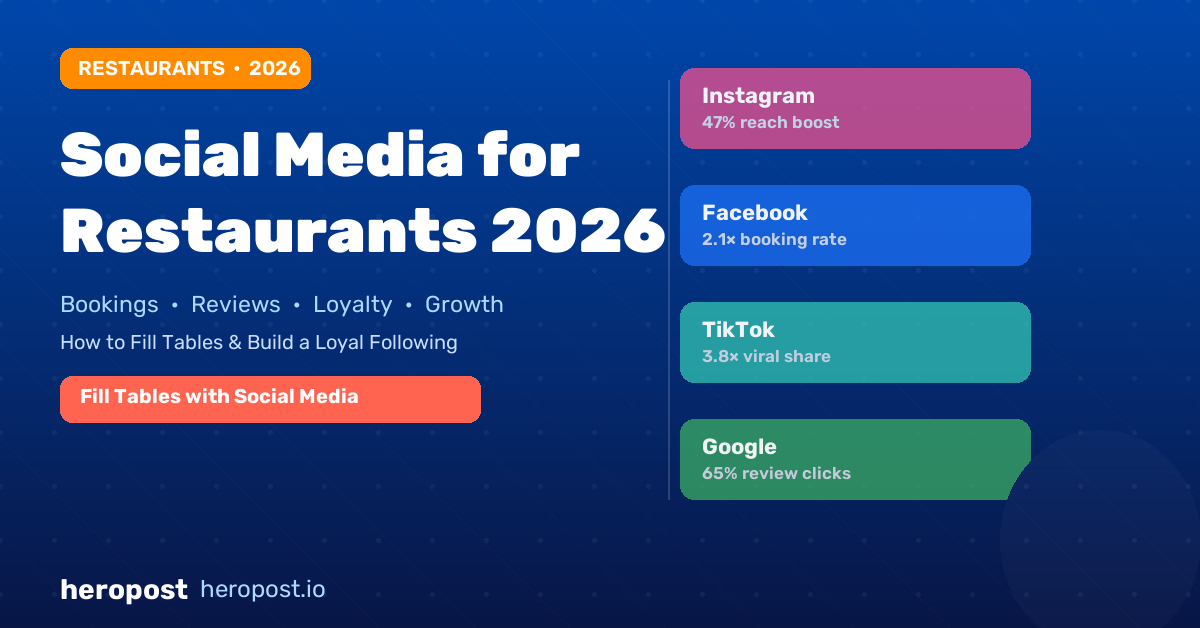
Instagram — The Essential Platform
Instagram is non-negotiable for restaurants. It functions as your visual menu, your atmosphere showcase, your reviews aggregator, and your booking driver simultaneously.
What works on Instagram for restaurants:
- High-quality food photography: Proper lighting, thoughtful composition, and styled presentation. You do not need a professional photographer for every shot, but you need to invest in learning basic food photography or hire someone for monthly sessions.
- Reels and short video: Behind-the-scenes kitchen content, dish preparation, cocktail pours, and “a day in our restaurant” videos consistently outperform static posts in reach.
- Stories for daily specials and updates: Use Stories for daily specials, limited availability announcements, staff features, and real-time content that does not need to be permanent.
- Location tags and hashtags: Tag your location on every post. Local hashtags (#EdinburghFood, #ManchesterEats) drive discovery from people actively searching in your area.
- User-generated content: Encourage customers to tag you. Repost the best content (with credit). UGC is authentic social proof that sells better than any professional shot.
TikTok — The Reach Machine
TikTok is where restaurants go viral. The algorithm gives new accounts a genuine chance at organic reach that Instagram no longer offers. A single great TikTok from a restaurant can generate tens of thousands of views and result in a queue outside the door the following weekend.
TikTok content that works for restaurants:
- “How we make [dish]” — process videos showing kitchen craft
- “Day in the life of a chef” — authenticity-first content
- Trending audio paired with satisfying food visuals
- “Hidden gem” framing — “the restaurant nobody talks about but everyone should try”
- ASMR food content — sizzling, crunching, pouring
- Honest Q&A — answering customer questions about the menu, sourcing, reservations
TikTok rewards authenticity over production quality. A genuinely entertaining 30-second video shot on a phone outperforms an over-produced minute-long promotional video every time.
Facebook — For Reservations and Events
Facebook’s primary value for restaurants in 2026 is its Events feature and its older demographic (35-65), who remain active bookers and are willing to engage with longer-form content.
Use Facebook for:
- Events: special dinners, seasonal menus, cooking classes, wine tastings
- Sharing blog posts and long-form content
- Community engagement via local Facebook Groups
- Facebook Ads targeting local demographics with specific offers
Google Business Profile — Not Social, But Critical
Technically not social media, but Google Business Profile is where a huge percentage of restaurant discovery happens. Keep yours updated with photos (post new images weekly), respond to every review (positive and negative), and update your hours and menu regularly. Google surfaces restaurants with active profiles higher in local search results.
Content Strategy: What to Post and How Often
The Restaurant Content Calendar Framework
Structure your content around five pillars:
1. Food and Drink Showcase
Your menu is your primary content. Every dish, every seasonal special, every cocktail creation is content. Shoot new dishes when they launch. Create video of signature dishes. Show the craft behind what you serve.
2. Kitchen and Team
People connect with people. Behind-the-scenes content featuring your chefs, front-of-house team, and kitchen operations humanises your brand and builds emotional connection. “Meet the chef” content, morning prep routines, team celebrations — all of this works.
3. Story and Values
Where do you source your produce? What is the story behind your signature dish? Why did you open this restaurant? What does hospitality mean to your team? Content that communicates your values and story attracts customers who share those values and become the most loyal regulars.
4. Customer Moments
Table celebrations, proposals (with permission), families marking milestones, regulars who have been coming for years — these moments are your most authentic content. Feature your customers (always with permission) and they become advocates.
5. Promotions and Announcements
New menu launches, seasonal specials, limited-run dishes, events, and special occasions. Keep this to approximately 20% of your content — promotional content in isolation feels hollow.
Posting Frequency
| Platform | Frequency |
|---|---|
| Instagram Feed | 4-5x/week |
| Instagram Stories | Daily |
| TikTok | 3-4x/week |
| 3x/week |
Consistency matters more than volume. Four quality posts per week sustained over six months outperforms twenty posts in a burst followed by silence.
Photography and Video on a Restaurant Budget
Professional food photography is an investment that pays back quickly — but it is not the only route.
DIY photography tips:
- Natural light is your best friend. Shoot dishes near windows during daytime service. Avoid overhead fluorescent lighting at all costs.
- Clean backgrounds and props. A wooden board, a linen napkin, or a simple dark surface can elevate a dish photograph dramatically.
- Shoot from above or at a 45-degree angle. These two angles work for 90% of food photography situations.
- Edit consistently. Use the same filter or preset across your feed to create a coherent aesthetic. Lightroom presets for food photography are available for under £20.
Video on a phone:
- Stabilise your phone. A £20 phone holder or mini tripod eliminates shaky footage.
- Shoot in good light. The same principle as photography — natural light transforms video quality.
- Use trending audio. On TikTok and Reels, matching your video to a trending sound significantly increases algorithmic reach.
- Keep it short. 15-30 seconds is the sweet spot for food content on TikTok and Reels.
Converting Followers Into Bookings
Social media following is a vanity metric unless it translates into reservations and visits. Build conversion into your social strategy from the start.
Link in bio optimisation:
Your Instagram bio link is your primary conversion mechanism. Use it strategically:
- Link to your reservation system directly (not your homepage)
- Use a link-in-bio tool to offer multiple options: book a table, view menu, contact us, buy gift vouchers
- Update the link to match current promotions
Stories CTAs:
Instagram Stories with direct booking links (using the link sticker) consistently drive reservations. “Tonight’s special — 3 tables left” with a booking link creates urgency that drives immediate action.
DM conversations:
Many customers prefer to enquire via DM rather than call. Respond quickly, personally, and move them towards a reservation. A DM that goes unanswered for 12 hours loses the booking.
Exclusive social offers:
Followers who see “mention Instagram for a complimentary amuse-bouche” have an incentive to follow and to visit. These offers also let you track social media’s direct impact on covers.
Responding to Reviews and Comments
Social media is a conversation. Restaurants that broadcast but do not engage build audiences but not communities.
Respond to every comment. On Instagram, a simple “thank you” or a specific response to a compliment builds connection and signals to the algorithm that your content generates engagement.
Handle negative feedback with grace. A poor review handled well often impresses more potential customers than a perfect review. Acknowledge the issue, apologise sincerely, and invite the customer to return. Never argue publicly.
Celebrate UGC. When a customer tags you in a beautiful photo, reshare it, thank them publicly, and credit them by name. This behaviour encourages more customers to tag you and creates genuine community.
Conclusion
Social media for restaurants is not complicated — it is showing your food, your people, and your story in a way that makes someone say “I want to eat there.” Do that consistently, engage genuinely with your community, and track what content drives reservations.
The restaurants with the most loyal followings in 2026 are the ones where social media feels like an extension of the hospitality they offer in person — warm, genuine, and generous.
Heropost helps restaurant teams manage their social media in one place — schedule posts across Instagram, TikTok, and Facebook, respond to comments from a single inbox, and track what content drives the most engagement. Start your free trial at heropost.io.